Ability-to-Pay (ATP) Assessments
No person should be ordered to pay a fine or fee that is beyond their capacity. Anytime a court seeks to impose a cost on an individual, it must first conduct a meaningful ability-to-pay analysis.
FFJC believes that, although fines may have a role in the criminal legal system, any fine imposed must be both proportionate to the offense and to an individual’s financial circumstances. And although FFJC advocates for the elimination of all fees imposed in the criminal legal system, where they are currently mandated by law, they must also be subject to reduction and waiver based on a person’s ability to pay.
Ability-to-pay assessments provide a transparent and consistent framework for courts to better ensure people can afford to pay the fines and fees assessed by the court. Though many jurisdictions recognize the necessity of determining ability to pay, very few meet the minimum constitutional requirements for assessing fines and fees.
Across the country, jurisdictions continue to impose unaffordable fines and fees, and the consequences for not paying – or not paying quickly enough – can be crippling and destabilize families and communities. Ability-to-pay assessments, when conducted in a meaningful and consistent way, are critical to ensuring the fairer assessment of financial sanctions in the criminal legal system.
Ability-to-pay assessments, when conducted in a meaningful and consistent way, are critical to ensuring the fairer assessment of financial sanctions in the criminal justice system.
Our position
- Courts have an affirmative obligation to inquire into a person’s ability to pay when imposing fines, fees, and other court costs.
- For fines, an ability-to-pay hearing or assessment should be conducted at sentencing before fines are imposed.
- Jurisdictions should develop or adopt guidelines to ensure fair and consistent ability- to- pay determinations.
- It should be presumed that individuals who meet certain thresholds cannot pay a fine or fee in any amount. These include, but are not limited to: qualifying for a public defender;
- current receipt of any needs-based public assistance/benefits;
- earning less than some established federal, state, or local income threshold;
- status as a minor;
- having experienced homelessness in the previous 12 months;
- is currently in or recently released from custody; among others.
- When a person does not have the ability to pay, courts should waive or reduce fines and fees, offer affordable payment plans, and provide alternatives to the payment of fines and fees. Alternatives may include expansive definitions of community service that include a wide range of prosocial activities, including educational or self-improvement programs, among others.
- An individual should never be punished for their inability to pay. Sanctions such as incarceration, bench warrants, parole or probation extension or revocation, driver’s license suspension, or denial of public services are inappropriate payment enforcement mechanisms that only serve to criminalize poverty.
Resources
- For an example of an adaptable legislative bill implementing FFJC’s guidance on ATP see the model Fines and Fees at Sentencing Act.
- For information on how to design and implement jurisdiction specific tools to improve equity and efficiency in conducting ATP determinations explore Designing Adaptable Ability-to-Pay Tools.
- To learn about ATP policy models designed to make fines and fees more equitable and affordable see Ability to Pay: Closing the Access to Justice Gap with Policy Solutions for Unaffordable Fines and Fees.
- For a detailed explanation of the ethical obligation of judges to make inquiries into an individual’s ability to pay review Ethical Obligations of Judges in Collecting Legal Financial Obligations and other Debts.
- For a discussion of the legal standards on the assessment of fines and fees read The Department of Justice’s Dear Colleague Letter.
- For a list of free and expansive community service options that any court can use as an alternative to a fine, please see FFJC’s Community Service Alternatives Guide
Featured
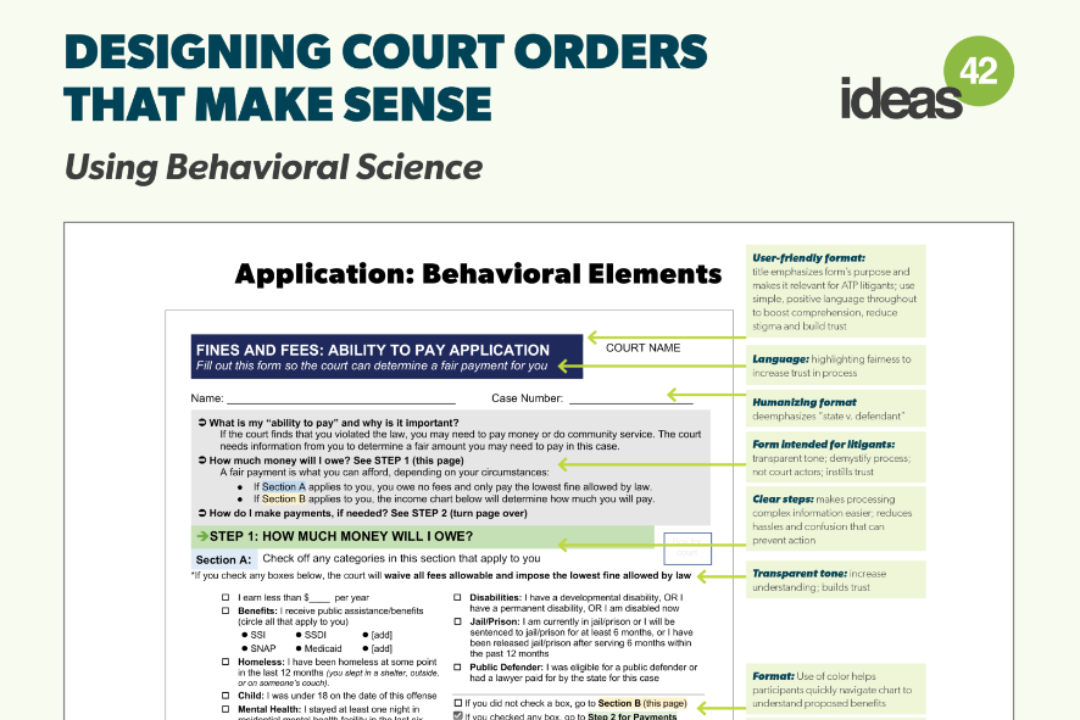
Using Behavioral Science To Create User-Friendly “Ability-To-Pay” Tools