This Work Takes Bravery
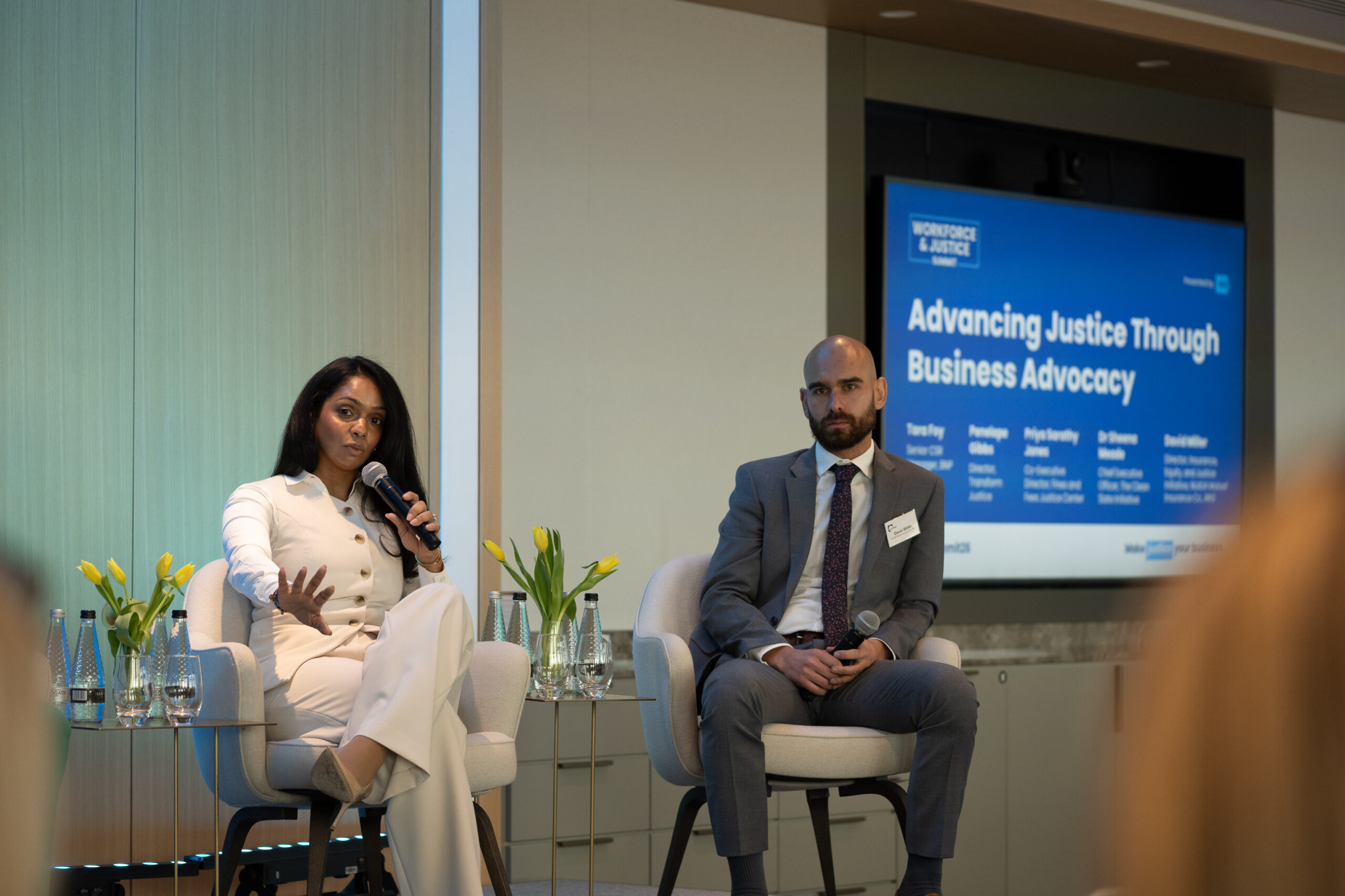
I have always been a bit wary of working with businesses in the pursuit of justice. Here in the United States, businesses are among the most influential and powerful voices shaping the decisions of legislators and government executives. Their money and influence play a significant role in our electoral systems. For all of these reasons, they can be some of the most valuable champions for justice reform.
However, businesses exist to turn a profit and they are required to mitigate risk and make choices that ultimately answer one question: how does this impact our bottom line?
The question of advocacy and the bottom line was a question I had when I was invited to speak at RBIJ’s Workforce and Justice Summit this month. The summit, held in London, connected leaders in business, advocates, and policy experts to find ways of bringing their expertise and experience together to create both equitable workplaces and develop a more fair justice system, on both sides of the Atlantic.
As an expert in criminal justice reform, I know that creating a fairer justice system has never been more sorely needed. And yet, we are at a time where resources and support for justice reform are wavering.
In 2020, the murder of George Floyd consumed this country in collective outrage and grief. Businesses like JP Morgan Chase and Target were thrust into the center of the fight for justice, with many lending their voices, staff and money to raise an urgent question for advocates: what is the role of the corporate community in helping spur change?
FFJC received many calls in those days, and the first thing I told prospective partners was: please think carefully about what you are committing to before you commit. Stepping back will do more damage than good — this is a long fight, and it demands staying power.
Six years later, we find ourselves further back than where we were in 2020. Several of the businesses that stepped up in 2020 have now fully stepped back. Many companies have stripped equity statements from their websites, diversity has become a liability instead of an asset in the corporate world, and inclusion has been attacked across the country, from the halls of higher education, to the technology companies that drive so much of our lives, all shoving years of hard-won progress into dark closets.
And so I was genuinely encouraged by what I heard in London this year.
Speakers from U.S. businesses and the U.S. Chamber of Commerce clearly described the current state of fair chance hiring and the possibilities for justice advocacy more broadly.
There were even attendees who still hold the title of DEI officer — a small but meaningful sign that not everyone has retreated. At this moment in the justice reform movement, an organization like RBIJ plays an essential role: engaging businesses on their opportunities — and sometimes their obligations — to join the fight for justice. The case is strong both as a moral imperative, and also because it is good for the bottom line.
Everywhere I turn these days, there is a new challenge to overcome. We are seeing a push toward harsher punishments, policing that is disconnected from community, and cash-strapped governments turning to the justice system to generate revenue. These are the issues FFJC works on every day — fighting for safer communities, fair treatment, and a justice system where outcomes are not determined by bank accounts.
What lies ahead will require resolve and perseverance in the face of deep resistance. It will take brave people — and brave businesses — willing to use their economic power and influence to advocate for meaningful reform.
FFJC, alongside our partners at RBIJ, will be ready to meet that challenge. We are ready to be brave in the face of what is ahead, but we can’t do it alone. Will you join us?
Recommended Articles
A Note From Joanna