From the Philippines to the U.S.: Lessons on Fines and Fees Reform from the Second National Decongestion Summit
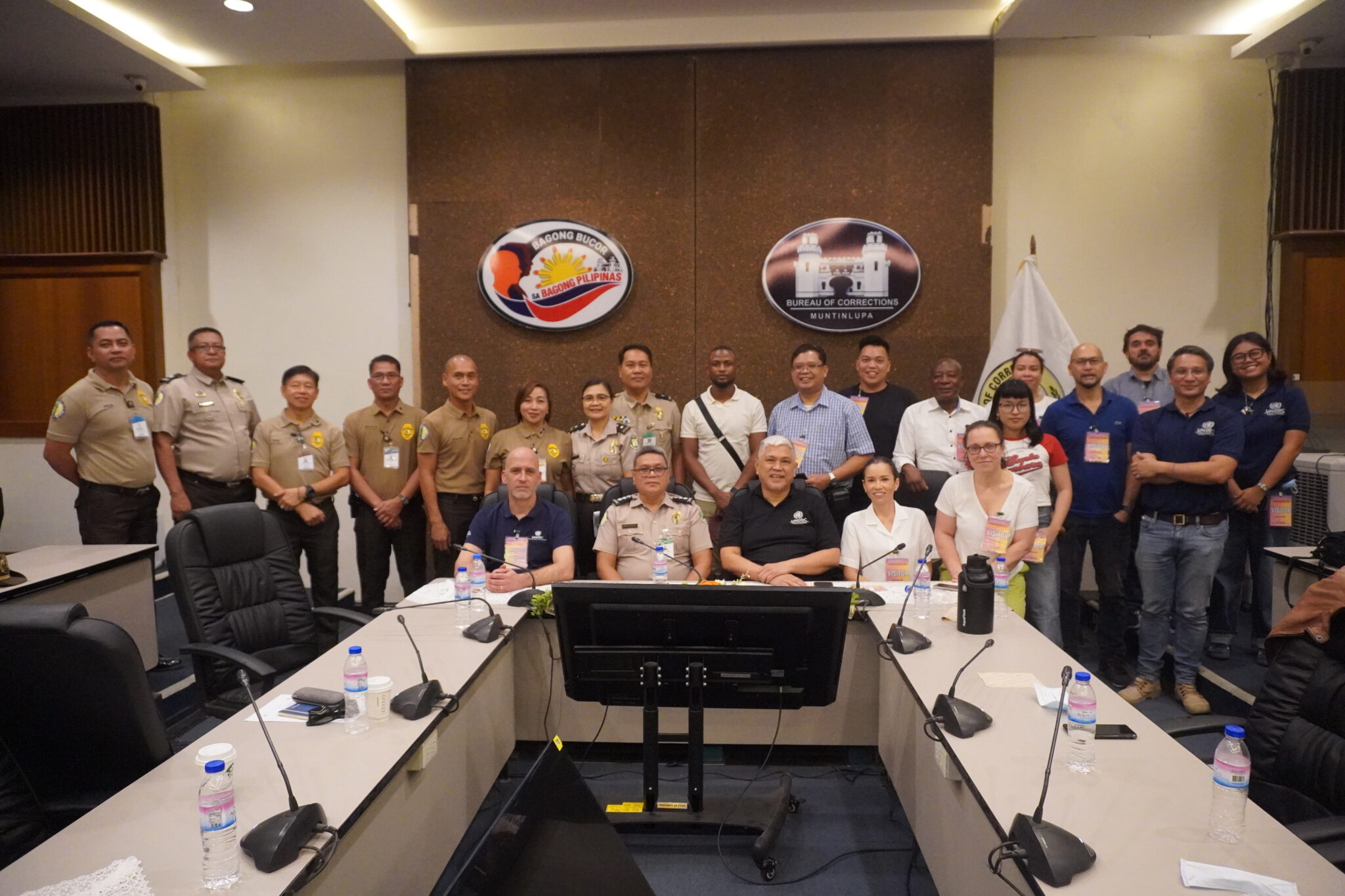
In January, the United Nations Office of Drugs and Crime (UNODC) sponsored the Philippines’ Second National Decongestion Summit in Manila to generate concrete plans to address the severe overcrowding of the country’s jails and prisons as the Philippines re-writes its criminal code for the first time in 100 years. As one of the ten criminal justice experts from around the world invited by UNODC, I was honored to present lessons learned from FFJC’s work advancing fines and fees reform in the United States, and advise on necessary changes to their criminal code and practice.
Throughout the Summit, I also had the opportunity to speak with legislators, community stake-holders, and other experts to expand my understanding of the problems faced by the Philippines and explore potential local solutions. What I saw is something that those of us working at FFJC to end onerous fines and fees in the United States have long known: that reform is vitally necessary and that policy experts and advocates must work in partnership with practitioners and people with lived experience to drive effective durable reform.
To be sure, fines and fees reform in the Philippines is desperately needed. An estimated third of the people incarcerated in the Philippines are there for ordinance violations and unpaid fines. Overcrowding in the Philippines is rampant, and dangerous. On average, jails and prisons are at about 300% capacity.
During the visit, UNODC brought me and the other international guests for a first-hand look at this overcrowding; we visited the prison infirmary where dozens of emaciated elderly men laid in beds wearing oxygen masks. A white board listing how many people incarcerated at the prison had various diseases, and showed that 34 people in the prison had Tuberculosis. Families must bear the cost of their incarcerated loved one’s medical treatment.
The jail visit in many ways was more devastating. After two years of reform efforts, the Manila jail is at nearly 400% capacity. Like in American jails, two thirds of the people incarcerated in the Philippines jails have not had their cases adjudicated. However, in the Philippines, where the constitution also guarantees the right to a speedy trial, the average time for a case to be adjudicated is five years.
Even low-level ordinance violations and drug charges are commonly punished by both incarceration and fines. I walked into a women’s “dormitory” which housed 73 women and did not have enough beds or even floor space for all the women to lay down to sleep. I asked the women how many of them owed fines. Nearly every woman raised her hand. When I asked the women how many could afford to pay their fines, not a single hand was raised.
Instead, when People Deprived of Liberty (how people who are incarcerated are described in the Philippines) can not pay up, their fines are converted to additional days in jail. This conversion of fines to additional jail time still occurs in the United States as well, and it was enraging to see the devastating results of this policy in the Manila jail.
I quickly calculated that if just half of the 120,000 people incarcerated in Philippines jails owe the lowest level of fines (10,000 Pesos), that means an additional 1.2 million days of jail stays that serve no public safety purpose. Not only do they cost tax payers, they devastate individuals and their families, who must continue financially supporting their incarcerated loved ones in order to meet their basic needs, paying for everything from hygiene products to the cost of their electricity.
Although fines reform would only serve as part of the solution needed to solve the incarceration crisis in the Philippines or in the United States, eliminating overly punitive sentencing–like adding significant fines on top of jail time and disregarding someone’s ability to pay–is a low-hanging fruit that would not only release thousands of people from custody, but also keep them out of custody.
Research shows that fining people who have no ability to pay leads to higher recidivism rates and other public safety problems. Meanwhile, offering alternatives to monetary sanctions like community service reduces the chance of reoffending and promotes positive contribution over punishment.
During my presentation at the summit, I emphasized the benefits of alternatives to fines, including a broad model of community service like the one defined in Texas law. The Texas definition of community service, which has also been adopted in New Mexico, includes; studying to get a GED, job skills training or receiving social services and an array of pro-social activities focused on rehabilitation and community engagement.
Throughout the conference, I recognized familiar patterns in the punitive processes and areas in need of reform. This was, sadly, unsurprising. The Filipino criminal code was written in the 1930s during the United States’ colonial rule, and their debtors’ prison practices were learned from the U.S.
Initially, I was encouraged by the fact that the Filipino legal system did not seem to have inherited the use of the wide array of justice system fees that pervade the American system. However, after speaking with people with lived experience as well as prison staff, I realized that the lack of fees did not translate to equity. While resources like phones, tablets, and even public defenders might not have associated fees, access to things is limited exclusively to online court hearings, negating any potential benefits of a fee-free system.
This nuance is crucial to consider, especially as my colleagues and I continue to fight for fee elimination across the U.S. It is imperative that eliminating fees not only eliminates regressive taxes on incarcerated people and their families, but that it also improves access to justice.
Punitive measures, however, are not the only similarities between the two countries. The Filipino constitution was also heavily influenced by the U.S. and contains many of the same protections. Citizens are entitled to speedy trials, due process, and defense against excessive fines and cruel and unusual punishment. However, the government is not honoring these constitutional responsibilities, despite its adherence to the criminal code.
From this, an indefensible tension emerges. If you cannot provide people with a safe, healthy facility, they cannot be incarcerated there. You can’t protect people against cruel and unusual punishment while incarcerating them in jails at 400% capacity, where people are dying from diseases that spread rapidly in inhumane conditions. Those things are completely incompatible.
On the other hand, the panels were also an opportunity for me to see the effects of forward progress. The summit was particularly enriched by the involvement and leadership of people with lived experience. Three of the foreign experts invited to the summit were formerly incarcerated, including a professor in Illinois who was incarcerated in the Manila Jail for seven years before his acquittal. Now, he plays a crucial role in reform, including working with the jail administration and even some of the same guards that worked at the jail during his own incarceration.
I was–and still am–struck by his ability to endure years of trauma and then channel that trauma into ensuring that other people don’t have the same experience that he did. He is continually showing up and leading the way on reform so that people are treated more fairly and more equitably. His years of collaboration with practitioners and policymakers contributed to reducing the population of the Manila Jail from 600% capacity just a few years ago to the 400% capacity we saw during our visit.
This collaboration is standard operating procedure at FFJC.. In order to implement durable, effective solutions, we must involve people with lived experience at every step of the reform process. For example, in New Mexico, FFJC worked with justice-impacted advocates to garner broad bipartisan support to pass Senate Bill 47, one of the most comprehensive bills in the country to end debt-based driver’s license suspensions. .
And in New York City, in 2018, FFJC and our partners, including many people incarcerated or formerly incarcerated at Rikers Island successfully lobbied the New York City Council to make New York City the first city in the country where all jail phone calls are free of charge. In February, Mayor Zohran Mamdani appointed Stanley Richards to lead the Department of Corrections, making him the first formerly incarcerated person to head the city’s jail system. And, Commissioner Richards is bringing policy expertise into the highest leadership positions in the agency. That is the way to enact durable reform that will have maximum impact.
From New York and New Mexico to Manila, these examples show what is possible when impacted voices are brought to the table to drive policy reform. My trip showed me how the exporting of harmful criminal justice policies, including the use of excessive fines and draconian punishments for inability to pay, hurt everyone, and durable reform is driven by collaboration between policy experts, advocates, practitioners and the expertise of the people most affected by those policies.
The harm of excessive fines and resulting debtors’ prisons in the Philippines is stark and disturbing, but I continue to be inspired by the courage and the drive of the people who are pushing for change in that country — as well as the people pushing change in ours.
Recommended Articles
A Note From Joanna